How lessons work
I meet with each student weekly over FaceTime or Google Meet— no special software needed.
I meet with each student weekly over FaceTime or Google Meet— no special software needed.
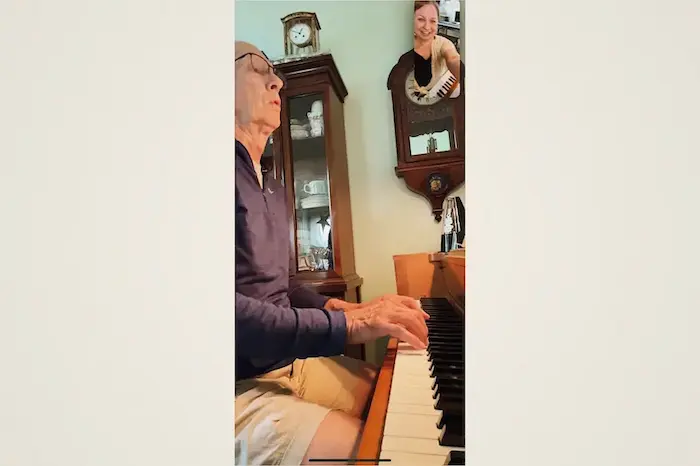
I use multiple camera angles during lessons so students can see: my hands, the keyboard and my face.
Getting to choose which angle to use and when is one of my favorite parts of online teaching: it lets me choose when to shift into a technique demonstration (side view) versus teaching the notes to a song (overhead view) versus having a laugh over a missed note (front view).
I can clearly see the student as well, which allows me to give real-time feedback on their posture, hand position, and technique as appropriate.
We take a few minutes to chat at the beginning of each lesson so that we can get to know one another just as we would in person. That keeps lessons personal and connected.
During each lesson I write out clear practice assignments and we review them together before saying goodbye.
After each lesson I send out assignments by text so nothing gets lost. I encourage parents of younger students to print their assignments - or write them in a notebook - and leave them on the piano for the kiddo to see each day.
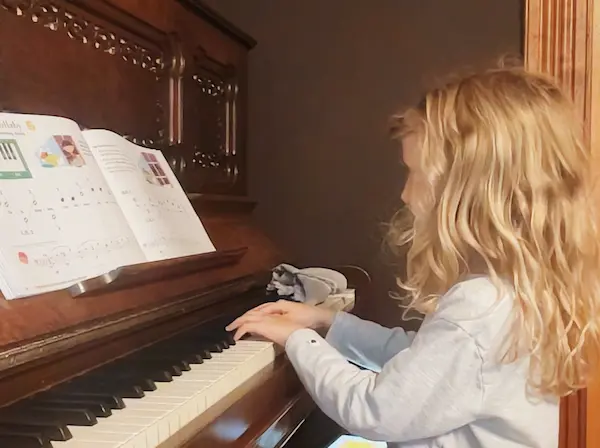
New students start with a free trial lesson, where I help choose the materials that best fit their goals.
From there, we'll follow a consistent curriculum while also bringing in music the student chooses.
That might include:
In each lesson, I blend technique, reading, rhythm, and creativity — grounded, but never rigid.
Thirty minutes moves quickly when a student is focused, supported, and working on music that actually matters to them.
Read Next → Lesson Options + Pricing